
#1
On Bobby Avila and AL Player of the Week Angel Martinez

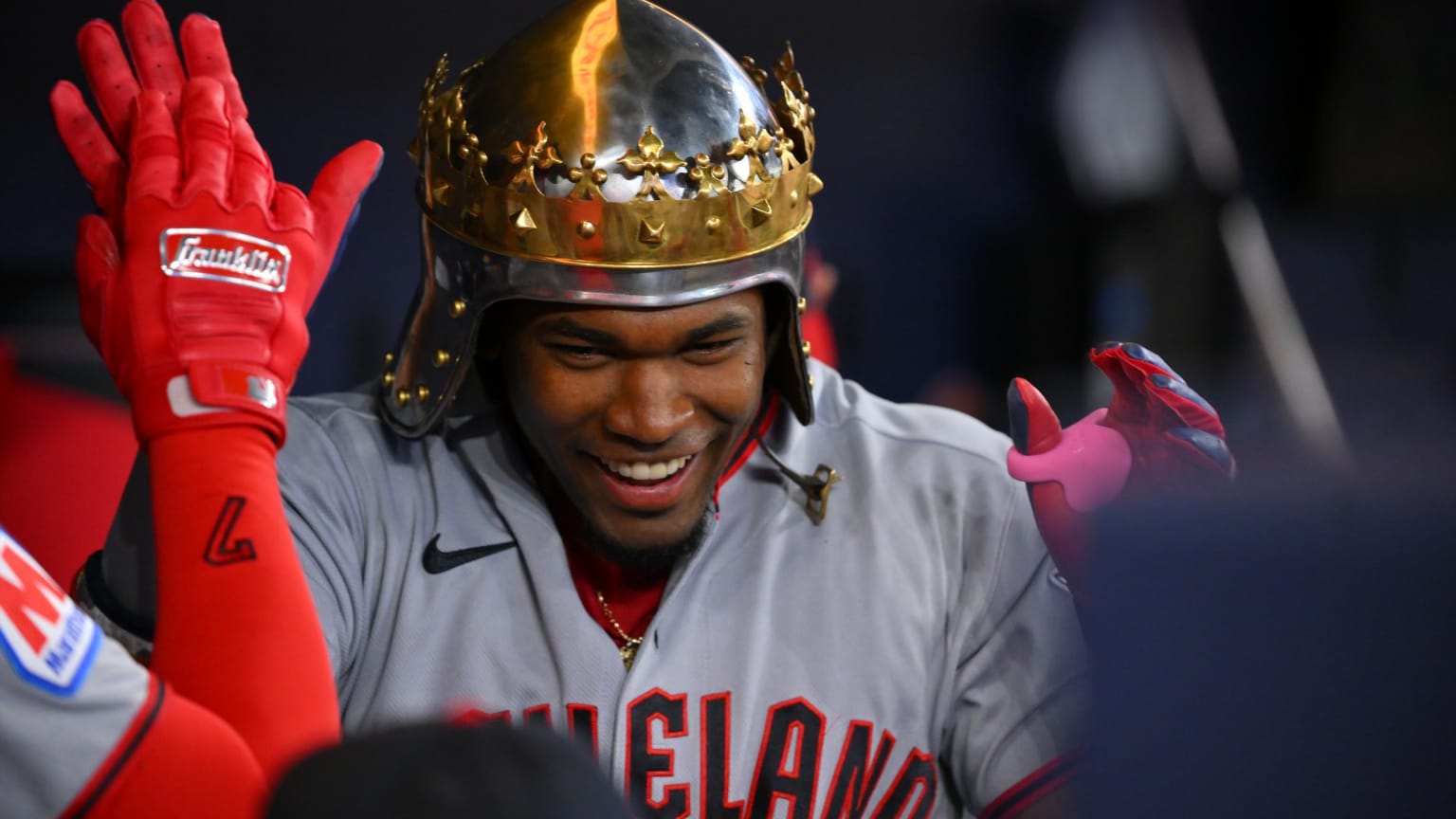
Angel Martínez earned AL Player of the Week honors last week after batting .333/.385/.875 (!) with four home runs (including a two-homer game). José Ramírez insisted last year that Martínez would be a star—fool me for doubting the future Hall of Famer. Angel has made dramatic improvements this season, boosting his batting average and on-base percentage by about 40 points while unlocking a level of power I never expected from the switch-hitter.
It would be unfair to compare Angel to José, but the parallels are easy to spot. Both are switch-hitters from the Dominican Republic, and both are breaking out at young ages (Ramírez at 23, Martínez now at 24). Both are unlocking unexpected power. That’s where the similarities end, however. José is not a free swinger like Angel, and he is (so far) the more complete player—better on the bases and in the field. It’s too early to draw firm conclusions on Angel, but it’s hard not to dream when the comparison comes so easily.
Cleveland Players Who Wore 1: 35
Some stars have worn No. 1 in Cleveland history. Tony Fernández sent the 1997 Indians to the World Series, ending the only postseason extra-inning 1–0 game in history with a majestic home run in Baltimore. Kosuke Fukudome, who came over from the Cubs to help down the stretch in 2011, briefly wore the number. Amed Rosario wore 1 for the 2022 AL Central–winning club that shocked the Yankees.
My favorite player to wear No. 1 is Casey Blake. Blake came to Cleveland as a free agent before the 2003 season. He was a late bloomer—not a star, but constantly underrated. He did nothing spectacularly, which often led to complaints. But Blake hit for a decent average, walked a fair amount, and provided some pop. Every year he was good for around 20 homers, about a .330 OBP, and solid defense at multiple positions, all while hitting wherever he was asked in the lineup.
In 2005, when the Indians nearly won the AL Central for the first time since 2001, he batted .241 with 23 homers while playing solid right field next to Grady Sizemore. In 2007, he moved to third base, hit .274, and swatted another 18 homers while continuing to play steady defense.
Blake was a classic role player—not the best player on the team, never an All-Star, but always contributing. As a kid, I remember a blog called “Dump Casey Blake” that constantly griped about his inadequacies, and in some ways I get it. Blake wasn’t an outstanding defender (though Baseball-Reference credits him with 27 fielding runs above average), he was roughly a league-average hitter (career OPS+ of 107), not a great baserunner (never even 10 steals in a season), and he didn’t play a premium defensive position (logging over 100 games at first, third, and right, but only one at shortstop or second).
Of the eight seasons in which Blake played 100 or more games, he was worth between 2 and 4 WAR in seven of them. He was about as close to the definition of an average player as you can get (his only truly above-average WAR season came in 2009 with the Dodgers). But there’s nothing wrong with an average player. Blake showed up, did his job, and helped his team win. He did it with a smile, and he had some great moments—like starting a 5-4-3 triple play, walking off the Tigers in 2007 (his second of that home stand), and hitting a memorable grand slam. We need more Casey Blakes.
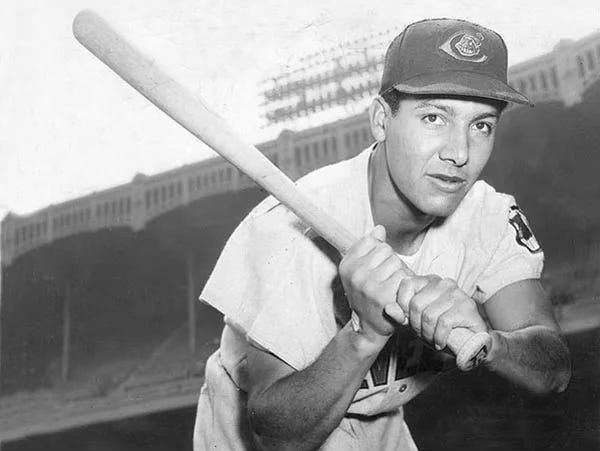
Player Who Wore 1 the Longest: Bobby Avila (10 seasons)
Bobby Avila was among the earliest Mexican players to join Major League Baseball, and arguably Mexico’s first star. He led the Mexican League in hitting before coming to the states batting a superb .350/.450/.480. The Indians signed him before the 1948 season and sent him to their minor league club, the Baltimore Orioles. Avila waited until 1949 to play, unfortunately, as he missed the 1948 World Series winning club. It was not until Hall of Famer Joe Gordon went down with injury that Avila got his shot in Cleveland, but he made the most of it and in 1951, his first full season, he broke out (Joe Gordon would retire that season).
It would be unfair to call Avila an instant success: he struggled in his cup of coffee in 1949, and while his 80 games in 1950 were strong they were not quite what you saw later in his career. However, from 1951 to 1955 Avila was arguably the best second baseman in the American League batting .301/.374/.416 (OPS+ 117), capped off with a superb 1954 season where he led the league in hitting batting .341 and finishing 3rd in the MVP race* behind Larry Doby and Yogi Berra. It would be unfair to place all the credit for the Indians record breaking 1954 season: but he was as big a part of it as any player on the ‘54 club.
*In hindsight the 1954 MVP race went horribly for the Indians. Bobby Avila, Larry Doby, and Bob Lemon all received 1st place votes. Early Wynn got in on the action a bit too. If you add up all the votes that Avila, Doby and Lemon received they would have swamped Yogi Berra in the voting. Minnie Minoso probably deserved the award, but Avila was probably the best option who played for the Indians.
Here’s the thing with Avila: he was never a power hitter, but he always hit for average. In the middle of the 1954 season, when he set a career high of 15 homers, he was briefly lauded as a power hitter in the Plain Dealer. “There must be a lot of wind blowing out” Avila joked on August 15, 1954. By the end of the season: Avila would stand alone atop the American League Batting race, back when winning the batting title was almost the same as winning the MVP award.
Avila was humble in victory, calling Ted Williams the best hitter in baseball, and praised Hank Majeski (his roommate) for his offensive improvements. “Hank has done a lot for me” [Bobby] said seriously. “He helped give me confidence, worked on me to try harder, pitched lot of batting practice, Hank was the biggest reason.” With all due respect to Hank (who had a fine career) I think his explanation carries more weight: “that kid has all the natural ability in the world.” Hank told the Plain Dealer.
It would be difficult to understate how important Avila was for Mexico. Other Mexicans played in Major League Baseball, but not reached the heights Avila reached in the 1950s. As arguably the best player on one of MLB’s best teams, a batting title winner, and multiple time All-Star: Avila became a legend in Mexico. One writer who came to visit Avila was in shock when Avila was benched in his second to last season in a Cleveland uniform writing in the Orlando Evening Star:
“This is a national tragedy in Mexico, for Ah-Vee-La was the finest ballplayer to come south of the Rio Grande”
“They just pitch Avila close to the hands and nothing happens,” explains [Indians manager] Farrell who requires a right handed power hitter like a horse player needs fresh money. “The ball no longer travels when he hits it.”
It’s easy to forget Avila who spent his career with other stars. He shared a lineup with Hall of Famer Larry Doby, MVP Al Rosen, and later Rocky Colavito. The early ‘50s teams were dominated by pitching with a rotation anchored by Bob Lemon, Early Wynn and a still wily Bob Feller. But Avila was a star in his own right who shined brightly for Cleveland. It was only 5 years: but it was a heck of a 5 years.
Avila would return to Mexico in 1960 to a hero’s welcome and play one final season in the Mexican League where he returned as a star. Playing for the Mexico City Tigers .333/.480/.486, a similar line to the one he left in 1945.
Angel Martinez: Budding Superstar?
I did not believe in Angel entering the season—and in my defense, there was reason not to. He hit just .227/.277/.353 (OPS+ 76) over his first two seasons. He made contact, but without much power, lacked patience, and didn’t have a clear defensive home. Though primarily a second baseman in the minors, he was used in the outfield in Cleveland, and it didn’t go well. Baseball-Reference estimated he cost the Guardians 10 runs in the field in 2025, mostly in center field, while Baseball Savant placed him in the 26th percentile in fielding value. He’s also not a major threat on the bases, with just eight steals.
So of course, Angel has gone about changing nearly everything. He’s still a free swinger and doesn’t produce elite exit velocity, but he’s doing damage when he connects. His barrel rate sits in the 70th percentile, and he rarely whiffs (82nd percentile), allowing him to pile up hits—with power. He will almost certainly surpass last year’s home run total before the end of the month. He’s still not walking much, but that matters less when he’s putting the ball in play this often. He’s even turned himself into a solid defender, helped in part by a move to left field with Steven Kwan shifting to center.
It’s too early to know if this is sustainable, but his teammates fully believe in the transformation. “He’s starting to really believe he belongs here,” says hitting coach Grant Fink. José Ramírez has long insisted Martínez is a budding superstar, and others agree. “I’ve seen him do this in the minors for a long time,” says Brayan Rocchio. “He’s going to be a superstar.” The key difference now is the power—Angel is hitting for more of it than he ever did before.
Who knows what the future holds? I was wrong to discount him entering the season, and I hope he matches—or surpasses—Ávila’s five-year run as the best second baseman in the American League. If his teammates help him the way Hank Majeski helped Ávila, he’ll have every chance to get there.
-BenjaminJ